
 EN
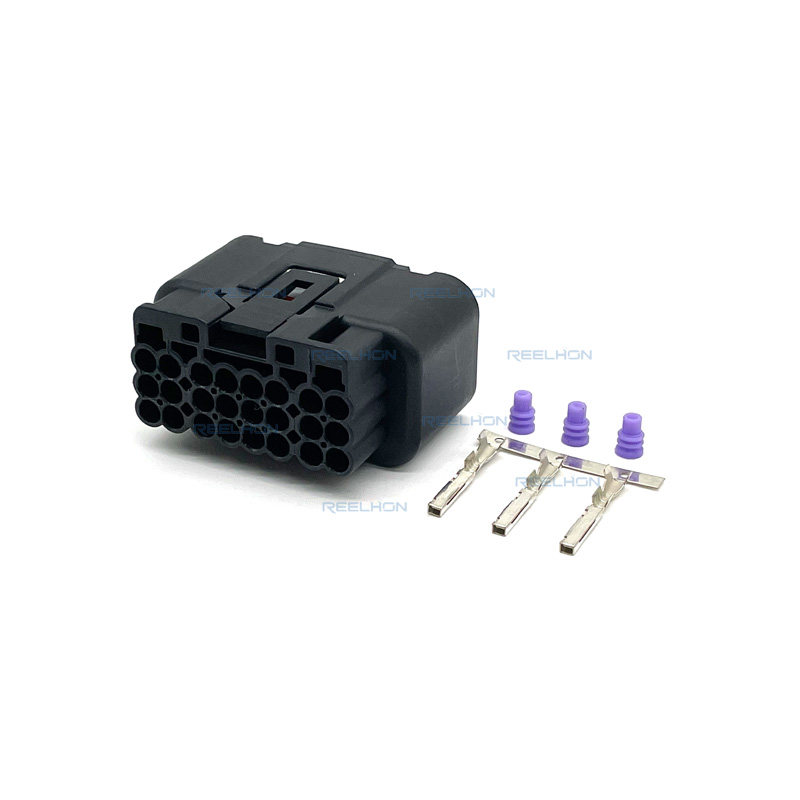
The automotive wire connector represents one of the most critical components in modern vehicle electrical systems, yet many manufacturers overlook the factory standards that ensure long-term reliability and safety. An automotive wire connector must withstand extreme temperature fluctuations, vibration, moisture exposure, and corrosive environments throughout its operational lifetime. Factory standards for moisture resistance in automotive wire connector design determine whether a vehicle's electrical system remains functional in rain, snow, salt spray, and high-humidity conditions. These standards are not arbitrary guidelines; they represent decades of engineering knowledge and field failure analysis across the automotive industry. Understanding automotive wire connector specifications helps procurement teams, design engineers, and quality managers make informed decisions that protect vehicle performance and warranty costs.

Moisture resistance standards for automotive wire connector assemblies define measurable performance criteria across multiple environmental test scenarios. These factory standards establish minimum acceptable thresholds for ingress protection ratings, material compatibility, sealing effectiveness, and electrical continuity under wet conditions. An automotive wire connector that meets factory standards delivers consistent performance regardless of deployment region, vehicle application, or operational duty cycle. The automotive wire connector industry relies on these standardized specifications to ensure interchangeability, reduce warranty claims, and maintain customer satisfaction across global markets. This article explores the essential factory standards governing automotive wire connector moisture resistance, the testing methodologies that validate performance, and the practical implications for manufacturers and end users.
Ingress Protection Ratings and Moisture Barriers
IP67 and IP68 Rating Systems
The automotive wire connector industry universally references IP (Ingress Protection) ratings to communicate moisture resistance capability. IP67 represents the minimum standard for most automotive applications, guaranteeing that an automotive wire connector resists dust ingress and temporary water immersion up to 1 meter for 30 minutes. IP68 rating indicates superior performance, allowing an automotive wire connector to withstand prolonged immersion or submersion under specified pressure conditions. Factory standards for automotive wire connector moisture protection require precise seal geometries, material compounds, and assembly tolerances to achieve these ratings consistently. The automotive wire connector connector contacts themselves must remain electrically viable even after exposure to moisture, making seal integrity paramount. Manufacturers test automotive wire connector samples using standardized test chambers that spray or immerse connectors while measuring leakage current and insulation resistance. These rigorous automotive wire connector tests ensure that a connector rated IP67 will perform predictably in field conditions.
Sealing Material Specifications
Factory standards for automotive wire connector sealing materials specify elastomer compositions, Shore hardness ranges, and compression set limitations. An automotive wire connector typically uses silicone rubber, fluoro-elastomer, or thermoplastic elastomer seals engineered to remain flexible across the automotive temperature range of -40°C to +120°C. The automotive wire connector seal material must resist degradation from ozone, ultraviolet light, engine fluids, and coolant exposure common in engine bay environments. Factory acceptance standards require automotive wire connector seal materials to maintain 50% or greater of their original compression force after 1,000 hours of thermal aging. The automotive wire connector sealing ring diameter, cross-section, and contact surface finish all follow dimensional standards that ensure interference fit without excessive squeeze force that could cause extrusion or tearing. Adhesive bonding of seals to an automotive wire connector housing body must meet peel strength minimums validated through destructive pull tests on representative sample lots.
Testing Protocols and Performance Validation
Salt Spray and Corrosion Resistance
Automotive wire connector factory standards mandate salt spray testing using ASTM B117 protocols or equivalent automotive specifications, simulating coastal and road-salt exposure environments. A standard automotive wire connector undergoes 500 to 1,000 hours of salt fog exposure while monitoring contact resistance increase, pin corrosion depth, and seal integrity degradation. Factory standards for automotive wire connector corrosion protection require metallic components to receive appropriate plating—typically nickel, gold, or tin—applied to precise thickness minimums that prevent base metal exposure. The automotive wire connector mating surfaces and contact tails must demonstrate corrosion resistance that keeps contact resistance below maximum permissible levels throughout the salt spray duration. Manufacturers validate automotive wire connector anti-corrosion performance using cross-sectional microscopy and X-ray fluorescence (XRF) analysis to confirm plating uniformity and thickness conformance. These automotive wire connector corrosion tests directly correlate to field performance in regions exposed to de-icing salts, maritime environments, and prolonged moisture exposure.
Thermal Cycling and Moisture Ingress
Factory standards for automotive wire connector durability include thermal cycling tests that alternate between extreme temperature and humidity conditions, replicating engine startup cycles and seasonal climate changes. An automotive wire connector undergoes repeated temperature transitions from -40°C to +85°C or higher while maintaining relative humidity between 85% and 95%, a scenario that stresses seal materials and causes micro-expansion and contraction cycles. The automotive wire connector contact resistance and insulation resistance measurements after every 50 thermal cycles verify that moisture has not compromised electrical performance. Factory acceptance criteria specify that an automotive wire connector must maintain contact resistance below 50 milliohms and insulation resistance above 1,000 megaohms following 500 cumulative thermal cycles. These rigorous automotive wire connector thermal stress tests simulate 10+ years of vehicle operation, identifying latent seal defects or material brittleness that field environments would eventually reveal. Manufacturers document automotive wire connector thermal cycling results to demonstrate conformance to ISO 16750 automotive environmental specifications and establish baseline reliability expectations.
Manufacturing Process Controls and Quality Assurance
Assembly Precision and Tolerance Stack
Factory standards for automotive wire connector assembly specify critical dimensional tolerances that directly influence seal effectiveness and contact retention. An automotive wire connector cavity depth, pitch, and center-to-center spacing must remain within ±0.05 to ±0.10 millimeters to ensure that inserted contacts achieve proper interference fit and moisture barrier continuity. The automotive wire connector mating surfaces require surface finish specifications of Ra 0.4 to 0.8 micrometers to prevent seal damage or bypass pathways during mating cycles. Factory process controls for automotive wire connector manufacturing include automated vision inspection systems that verify seal placement, contact seating depth, and housing dimensional conformance before final assembly. Manufacturers establish automotive wire connector statistical process control (SPC) programs using control charts to monitor cavity diameter, contact pin straightness, and seal compression force, with alerts triggered when any parameter drifts toward specification limits. These automotive wire connector precision manufacturing standards ensure reproducibility across production runs and manufacturing locations, preventing unplanned moisture ingress failures.
Incoming Material Verification
Factory standards require automotive wire connector manufacturers to establish incoming inspection protocols for purchased contacts, seals, housings, and wiring components. An automotive wire connector supplier must provide certification data confirming that seal materials meet compression set requirements, that contact plating thickness matches specifications, and that housing plastic resin batches comply with flame rating and moisture absorption limits. The automotive wire connector incoming acceptance criteria typically include destructive testing of representative samples from each production lot, validating contact retention force, seal peel strength, and crimp connection pull strength. Manufacturers implement automotive wire connector material traceability systems that document the origin, batch number, and test results for every component lot, enabling rapid identification and isolation if field failures trace to a specific supplier batch. These automotive wire connector supply chain controls translate factory standards into consistent product quality, preventing defective materials from entering production and potentially compromising moisture resistance performance.
FAQ
What IP rating must an automotive wire connector achieve for moisture resistance in passenger vehicles?
Most automotive wire connector applications in passenger vehicles require a minimum IP67 rating, guaranteeing resistance to dust ingress and temporary water immersion up to 1 meter for 30 minutes. This automotive wire connector standard provides adequate protection for typical road conditions, rain exposure, and car wash environments. Some critical engine bay applications or commercial vehicle variants may specify IP68 for the automotive wire connector to withstand higher pressure water jets or sustained flooding scenarios. OEM specifications must always be consulted, as some automotive wire connector applications may have unique environmental exposure that dictates higher ratings.
How often should an automotive wire connector be tested for moisture resistance during manufacturing?
Factory standards require that automotive wire connector moisture resistance testing occur at multiple stages: incoming material verification, in-process checks during assembly, and final product validation testing. An automotive wire connector design typically undergoes comprehensive moisture resistance testing including IP rating verification, salt spray exposure, thermal cycling, and electrical performance checks on representative samples from each production lot. Manufacturers establish sampling plans that ensure automotive wire connector testing frequency increases if quality metrics indicate process drift or if customer field feedback suggests emerging issues. Continuous environmental monitoring and periodic test re-validation throughout the automotive wire connector product lifecycle help detect material or process changes that could degrade moisture resistance performance.
Can an automotive wire connector rated for IP67 be used in fully submerged applications like electric vehicle battery connectors?
IP67 rated automotive wire connectors are designed for temporary immersion up to 1 meter for 30 minutes, but electric vehicle battery connectors and other permanently submerged or high-pressure jet applications typically require IP68 rating, which specifies continuous submersion or higher pressure exposure limits. An automotive wire connector supplier must provide detailed technical specifications indicating the depth, duration, and pressure parameters applicable to their IP68 design. Design engineers and procurement teams must verify that an automotive wire connector selection explicitly covers the intended submerged duty cycle, as using an IP67 component in an IP68 application creates unacceptable reliability and safety risk. Always consult OEM specifications and automotive wire connector supplier technical documentation to confirm suitability for submersion scenarios.
Table of Contents
- Ingress Protection Ratings and Moisture Barriers
- Testing Protocols and Performance Validation
- Manufacturing Process Controls and Quality Assurance
-
FAQ
- What IP rating must an automotive wire connector achieve for moisture resistance in passenger vehicles?
- How often should an automotive wire connector be tested for moisture resistance during manufacturing?
- Can an automotive wire connector rated for IP67 be used in fully submerged applications like electric vehicle battery connectors?